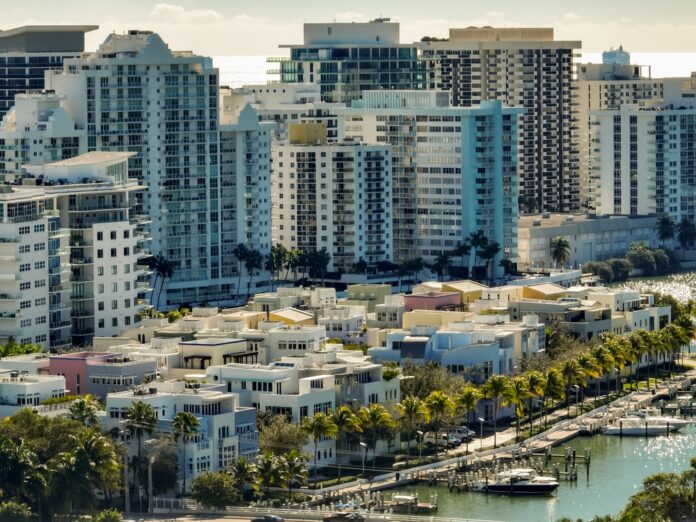
Over the past two to three years, institutional investors have raised billions of dollars earmarked for commercial real estate in Hawaii. Most of this capital remains unspent. Despite what appears to be a buyer’s market — with more attractive pricing and increased inventory — large investors are holding back. This creates a disconnect between the capital raised and actual market activity.
Mark Bratton, Senior Vice President of Capital Markets and Investment Sales at Colliers International Hawaii, attributes this gap to both the structure of institutional funds and a persistent reluctance among investors to act.
“Billions and billions of dollars have been raised to invest here, but we have not seen a lot of them actually close and transact,” Bratton says. “It’s mostly watching still.”
This presents a clear paradox. Investors have capital ready, have researched the market, and are positioned to act. Yet transactions remain scarce. This delay puts pressure on fund managers, who must deploy capital within specific timeframes or risk returning it to investors.
Fund Deadlines Pressure Managers
Institutional real estate funds are typically structured with defined investment periods, often around three years. If managers fail to invest the capital within this window, the money reverts to the original investors. Fund managers earn fees based on deployed capital, which creates strong incentives to commit funds as soon as viable opportunities arise.
Bratton says fund managers with Hawaii-specific mandates are motivated to deploy capital. Yet most of it remains idle. The underlying reason, he argues, is not purely financial. It is psychological.
“It’s really a mindset,” Bratton says. “Yes, rates going down 20, 30, 50 basis points would be helpful, but it’ll change the mindset of people. They’ll just be more prone to investing and taking risks.”
The barriers to deploying capital are as much psychological as they are financial. Investors are waiting for conditions that feel safer, even if current pricing already reflects many of the risks they cite.
Global Uncertainty Stalls Deals
Recent geopolitical events have reinforced investor caution. Rather than prompting opportunistic buying, global uncertainty has led investors to delay decisions as they seek clarity that may not come within their investment windows.
Bratton explains that sentiment can shift quickly when global events escalate. “As soon as this war broke out, a lot of investors said, ‘Well, maybe I should not make a decision. Maybe I should sit on my cash for now and see what happens.’”
This widespread hesitation has created a feedback loop. As more investors wait, transaction volume stays low, making it harder to establish clear pricing benchmarks. The lack of comparable sales adds to uncertainty, making investors even more reluctant to act. In Hawaii, the combination of geopolitical risk and interest rate volatility has made it easy for institutional investors to justify staying on the sidelines.
Scale Drives Institutional Decisions
The Blackstone-led acquisition of Alexander & Baldwin’s commercial real estate portfolio for $2.3 billion illustrates what it takes to move significant institutional capital in Hawaii. That acquisition involved about 25 shopping centers purchased in a single transaction, providing the scale and efficiency large investors now require.
Bratton points out that portfolio size has become a threshold requirement for many off-island institutional investors. “The size of the transaction and the scope matter,” he says. “Off-island groups would say, that’s great, but it’s not worth flying 3,000 miles to do business unless you can give me three of them or five of them.”
This creates a structural challenge for Hawaii’s market. Most transactions involve single properties or small portfolios that rarely meet the scale requirements of large funds. As a result, much of the institutional capital raised for Hawaii is likely waiting for the next portfolio opportunity comparable to the Alexander & Baldwin deal. Bratton notes that several groups considered “buying all the stock and taking it private.” Only deals of significant scale are likely to unlock these capital pools.
Without more large portfolios coming to market, individual property sales — regardless of quality — are unlikely to trigger major institutional investment.
Deal Volume Falls 20 Percent
Reluctance among institutional investors has contributed to a marked decline in statewide transaction volume. Bratton estimates that the number of deals is “down maybe a good 20% over where it was three or four or five years ago.”
This drop is not solely due to institutional caution. It also reflects a broader standoff between buyers and sellers. Many sellers remain anchored to peak valuations. Buyers, meanwhile, are pricing deals based on current conditions and higher borrowing costs. Bratton describes “a spread between the bid and the ask” that has made it difficult to close deals.
As a result, most recent transactions have involved owner-users — companies or individuals buying properties for their own operations rather than as investments. “Most of the transactions the past two years have been owner-users,” Bratton says, referring to buyers who purchase office buildings, warehouses, or hotels for their own use. While these deals are important for the local economy, they do not represent the large-scale institutional capital deployment many in the market have anticipated.
Confidence, Not Rates, Drives Action
Bratton suggests the catalyst for deployment may be a shift in investor confidence rather than specific economic metrics. While many investors cite interest rates as a key concern, he argues that even significant rate drops may not change behavior without a corresponding increase in risk tolerance.
“We thought, over the last 24 months, if interest rates dropped a little, everybody would change their behavior and jump in,” Bratton says. So far, modest and inconsistent rate declines have not spurred action.
Institutional capital could remain on the sidelines longer than fund timelines would rationally allow. Investors are waiting for a level of certainty that may not materialize before their deadlines, potentially forcing them to return capital to limited partners rather than invest in opportunities that may already be attractive by objective measures. In Hawaii’s commercial real estate market, ongoing hesitation may keep pricing and transaction volume subdued — even if market fundamentals stabilize. The capital exists, and opportunities are present. Until investor confidence returns, the gap between capital raised and capital deployed is likely to persist.