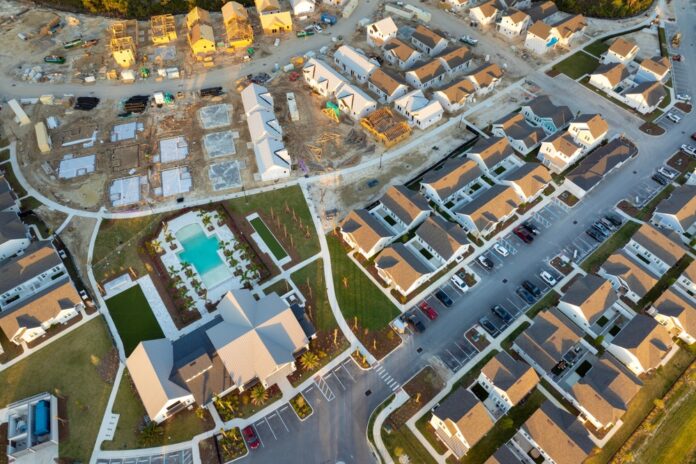
Recent rent declines in Austin, Texas, are being misread as signs of overbuilding, according to Robert Wall, managing partner at Verdot Capital. a Texas-based real estate development and investment firm. Wall contends that Austin, Texas, metro developers built new apartments in anticipation of population growth that is still unfolding. Wall says the downward pressure on rents reflects a timing mismatch, not a forecasting error. As the market absorbs the new units, Wall predicts rents will surge by 2027.
Wall says the untold story in Austin is that developers built aggressively because they anticipated incoming demand. “They built a lot because they knew the demand was coming,” he says. Wall argues that developers planned for future growth and delivered new supply at once, leading to short-term rent declines but avoiding future shortages.
Developers delivered units before new residents arrived, Wall says. This caused a temporary softness in rents but positioned the market to avoid future affordability problems.
Austin Suburbs Drive Rental Demand
Much of Austin’s current and future apartment demand is coming from the suburbs. Leander and Kyle, both within the Austin, Texas metro area, rank among the five fastest-growing cities in the United States, Wall says. Independent verification of this ranking is available through the U.S. Census Bureau population estimates.
“We are one of the fastest growing cities in America, and we have suburbs like Leander and Kyle,” Wall says, emphasizing the scale of migration into the region.
Wall contrasts Austin’s approach with cities he says did not build enough housing, such as Cleveland, Buffalo, and San Jose, California. In those markets, rents are rising because supply failed to keep pace with demand. Austin, Texas, developers built aggressively in anticipation of growth, creating a temporary surplus. The city avoided the long-term affordability crises seen elsewhere.
This strategy, Wall argues, is preferable to falling behind on construction. Undersupplying the market would have led to higher rents and fewer options for new residents. Wall believes critics of Austin’s building boom overlook the demographic trends that justified the construction wave.
Record Absorption Backs Developers
A key indicator supporting Wall’s argument is Austin’s apartment absorption rate, which measures how quickly new units are leased. Despite falling rents, Wall says Austin, Texas, is seeing what he describes as record absorption. Residents are moving into new apartments at an above-average rate, according to Wall.
“It just all happened at once, and it’s going to take a while to absorb, but it will absorb,” Wall says.
Wall acknowledges that rents are declining in the short term but describes the trend as a temporary adjustment. With developers pausing new projects, Wall expects the supply pipeline to shrink. Rent increases are likely once the current apartment supply is fully leased.
Wall’s view runs counter to the prevailing narrative that developers in Austin, Texas, overbuilt and now face a prolonged slump. Wall says the market is working as intended. Developers anticipated demographic growth, delivered supply, and are now seeing that supply absorbed at a healthy pace.
Wall Projects 2027 Rent Growth
Wall projects that rents in Austin, Texas, will rise in 2027, based on current absorption trends and slowing construction starts. Wall’s forecast is based on continued population growth, strong absorption of existing units, and a slowdown in new construction starts. With developers largely halting new groundbreakings, Wall expects fewer units delivered in 2027 and 2028, tightening the market.
“In 2027, I guarantee you, rents are spiking,” Wall predicted. His projection reflects his own market analysis and should not be interpreted as investment advice.
Wall concedes that economic shifts or changes in migration patterns could alter the outcome, but says the fundamentals support a return to rent growth within two years.
Market Outlook and Opportunities
Developers who built ahead of demand in Austin, Texas, are positioned to benefit as the supply overhang is absorbed, Wall says. Rather than starting new projects now, Wall argues that patient investors stand to gain as the market tightens and rents recover. Critics of the building boom, he argues, miss the broader context. Strong population growth and strategic planning have positioned Austin, Texas, to avoid the affordability crises seen in other fast-growing cities.
Wall also points to the senior housing sector as an example of what a supply-constrained market looks like by comparison. In Wall’s senior housing portfolio, rents are rising 8% to 10% annually, driven by limited new supply. Nationally, Wall says senior housing occupancy rates are at historic highs, around 90%, a figure consistent with data presented at the National Investment Center for Seniors Housing and Care conference. The contrast, Wall says, underscores the difference between a market that underbuilt and one that built ahead of demand. Austin, Texas, in his view, is the latter.
Wall notes that current market conditions are favorable for developers looking to move forward with new projects. Construction costs have held steady over the past year. Subcontractors are seeking work following the high-demand, high-price period of 2022 and 2023. Developers who can secure financing and navigate permitting can build at lower costs than during the previous boom.
Indicators to Watch
The next two years will test whether Austin, Texas’s construction boom was well-timed or premature. If population growth continues and developers remain cautious, Austin, Texas, could see rents rebound sharply by 2027, as Wall projects. A slowdown in migration or a surge in new construction could delay or dampen that recovery.
For now, Austin’s experience offers a case study in how building ahead of demand can create short-term volatility but potentially avoid long-term shortages. The market’s ability to absorb supply and developers’ discipline in limiting new projects will determine whether the current softness gives way to the next period of rent growth. More broadly, Wall notes that proposed federal legislation targeting large-scale rental property ownership — which could require owners of more than 350 build-to-rent units to sell off those properties unless build-to-rent is carved out as an exclusion — and cautious equity markets represent near-term uncertainties that could affect development timelines across his portfolio.