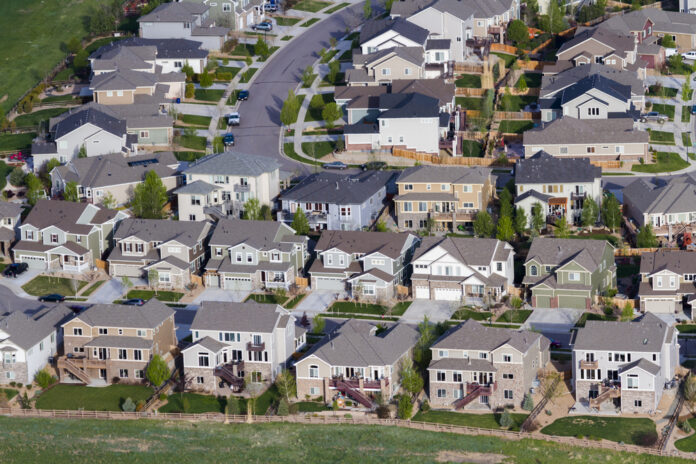
In Albuquerque, New Mexico, homes just blocks apart are experiencing sharply different market realities. Some attract multiple offers within days, while nearly identical properties sit unsold for weeks, according to Rene Kessel, REALTOR® at Coldwell Banker Legacy.
The city’s residential market resists simple definitions like “buyer’s” or “seller’s” market. Instead, it presents a patchwork of micro-markets where broad indicators fail to capture what’s actually happening on the ground. Within the same area and price range, one home may sell quickly in a bidding war while another lingers. This complicates decisions for buyers, sellers, and lenders who apply one-size-fits-all strategies.
“You will have some houses that are sitting on the market, and there’s nothing wrong with them. They’re priced right,” Kessel says. “And then you have other houses that you listed, and you get multiple offers. It’s a weird market right now.”
This fragmented landscape creates information gaps. Buyers, sellers, and lenders who rely on aggregate data or broad assumptions risk costly moves. They may miss opportunities or push for concessions that won’t work in a specific micro-market. In Albuquerque, local employment trends, neighborhood desirability, and property-level factors can create dramatically different supply-demand balances within the same zip code.
Lenders Misread Local Conditions
Fragmentation is leading to strategic missteps, especially regarding seller concessions. Kessel reports that at least one local lender is advising buyers to ask for two percent of the purchase price toward closing costs on every deal, regardless of actual market conditions.
“I think that locally a lender is giving bad advice, and there may be some people out of state who think that they can purchase properties that way,” Kessel says. On her own listings, such requests have been immediately rejected. These homes are still seeing strong demand, and sellers have no reason to make concessions.
This disconnect highlights a core problem. While market-wide data might suggest buyers have leverage, the reality for individual properties can be the opposite. Buyers who miss these distinctions often lose out to more informed competitors.
Kessel gives a recent example. She listed a home in a popular school district at a fair price. Instead of taking early offers at the asking price, she advised the seller to wait. The property ultimately sold for $25,000 over asking. “The sophisticated buyers know that even though for most of Albuquerque it may be a buyer’s market, for this little area, it was not,” she says. “It was a seller’s market, and they needed to act as such.”
Jobs Fuel Uneven Demand
Albuquerque’s housing market is also shaped by fluctuations in employment at major local employers such as Sandia National Laboratory, Intel, and IBM. These workforce changes send ripples through different neighborhoods and price brackets in unpredictable ways.
Recently, Sandia National Laboratory offered early retirement to a significant group of employees while simultaneously hiring new staff. Kessel notes that this “churn effect” creates movement in the housing market without reducing overall employment. “One minute they’ve got a hiring freeze, and then the next minute they’re bringing in people,” she says.
This churn affects some neighborhoods more than others. Areas favored by Sandia employees may see a temporary rise in listings as retirees sell, while new hires enter the market as buyers. The impact on any single property depends on timing, location, and price.
Intel’s cycles of hiring and layoffs have similar, though generally less dramatic, effects on local housing activity. IBM’s recent reductions have not produced noticeable changes, suggesting that affected workers are staying local or that the layoffs are too small to move the market.
These employment dynamics add uncertainty for buyers and sellers trying to time their decisions. Homes in areas tied closely to a single employer carry different risks than those in more diversified neighborhoods. That risk is rarely reflected in pricing strategies or listing approaches.
Strategy Tips for Buyers, Sellers
Albuquerque’s fragmented market makes relying on citywide data increasingly risky. Success now depends on understanding which neighborhoods are seeing the most demand, which price points are moving, and what specific features buyers want.
For buyers, blanket negotiation tactics can backfire. Asking for seller concessions may work on homes that have lingered in less desirable areas. But for move-in-ready properties in top locations, such requests often lead to missed opportunities. Sellers in those areas will hold firm or accept higher bids from better-informed buyers.
For sellers, the split market creates both openings and challenges. Homes that check buyers’ top priorities, such as updated condition, strong location, and realistic pricing, can still attract multiple offers even in a generally slower market. Properties missing one or more key features may remain unsold despite price cuts.
Kessel observes that this divergence is likely to widen as inventory remains below historical norms and buyers remain selective. The gap between high-performing and slow-moving properties could grow further. Those who adapt their strategies to the micro-market will be rewarded; those who rely on generalizations will not.
Why Local Precision Wins
Albuquerque’s real estate market now demands a granular approach. Aggregate trends and citywide averages offer little guidance for what a specific property will face. Buyers and sellers who invest time in understanding micro-market conditions, down to the neighborhood, school district, and property type, will have a clear advantage.
As the market grows more fragmented, success depends on precision, flexibility, and up-to-date local insight, not on broad assumptions or outdated strategies.