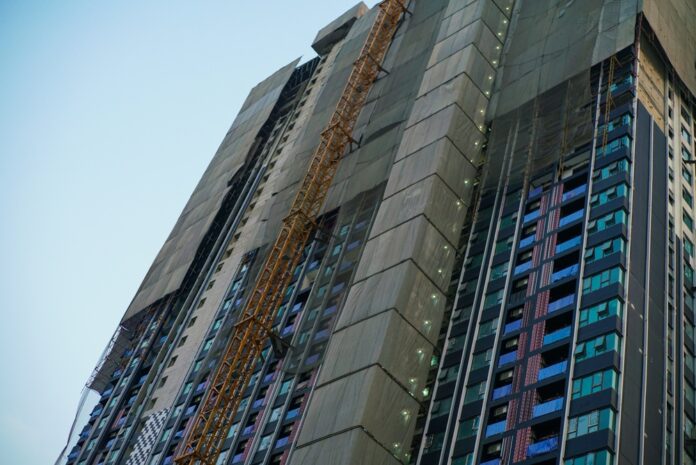
Rising labor costs and extended timelines are forcing companies and landlords to abandon office projects that would have been financially viable just a few years ago.
The office real estate market is facing an economic problem that has little to do with whether companies want to be in the office. According to Brett Polich, Managing Principal at EWP Architects, the cost to execute an office project has quintupled over the past five years, while timelines have doubled or tripled. The result is a wave of projects being shelved — not by lack of ambition, but by the math of affordability.
Labor Costs Drive Construction Surge
Much of the public conversation around construction costs has focused on tariffs and material supply chains. Polich argues that labor costs have become the primary driver of rising construction expenses, and that pressure will not ease with changes in trade policy.
“It’s always around cost. It’s rarely around ambition,” Polich says. “It’s more than tariffs. It’s more than material costs. It’s labor-driven.”
For building owners and tenants alike, cost relief is unlikely to come from any single policy change. The labor market dynamics driving these increases are embedded in the broader economy, narrowing the set of projects that can realistically move forward.
Long Leases Complicate Planning
The cost surge compounds decision-making challenges. When construction costs are high, tenants must commit to longer lease terms to justify the investment. Longer leases, however, require organizations to forecast their space needs far into the future — at a moment when the nature of work itself remains in flux.
“You have to push for a longer lease term just to bear the cost,” Polich says. “It’s hard to forecast where we’ll be in two years, let alone 10 years in a lease.”
This dynamic is creating paralysis among otherwise motivated tenants. Organizations willing to invest in a well-designed office are finding that the financial commitment demands a level of certainty they cannot provide. Decisions are taking longer, and more are not being made at all.
Spec Suites Face Slower Returns
The economics of repositioning existing buildings have deteriorated sharply. A spec suite — a pre-built office space tenants can move into quickly — once offered building owners a relatively fast return. Five or six years ago, owners could recoup that investment in roughly three years. Now the timeline has stretched past ten, meaning an owner must re-lease the space two or three times before breaking even.
“You have to re-lease it two or three times to get there,” Polich says. “And that’s a hard thing.”
Despite these pressures, Polich argues that upgrading existing buildings remains more viable than new construction. “It is cheaper to improve a building than build a brand new one,” he says. For mid-tier building owners caught between the cost of upgrading and the risk of staying static, this approach offers a path forward — but only for those with the capital and patience to see it through.
Planning Precedes Design Now
With costs this high, decisions made before construction begins carry more weight than ever. Polich says the work at EWP Architects has increasingly moved upstream — helping organizations define what a project should be before any drawings are made. That means mapping vision to budget, advising on trade-offs, and drawing on experience across thousands of completed projects to identify which decisions produce which outcomes.
“We can counsel and advocate,” Polich says. “From literally thousands of projects, we can tell clients what works, what doesn’t, and what outcomes come from certain decisions.”
As construction costs rise and timelines stretch, organizations most likely to move forward will be those that enter the process with a clear understanding of the trade-offs — and a firm they trust to help navigate them.