Austin’s rapid growth has outpaced its infrastructure, and that gap is reshaping where small and medium businesses choose to operate. High land costs, limited developable sites, and an aging road network have made the urban core increasingly difficult and expensive for small businesses to occupy. The shift is also being driven by a change in how small business operators think about risk. With interest rates elevated and liquid capital harder to access than it was two or three years ago, business owners are signing shorter leases, shrinking their footprints, and becoming more deliberate about every real estate commitment they make.
Lezlie Tram Le, Founder and CEO of LT Commercial Group, has spent years helping small and medium businesses find commercial space in and around Austin, Texas. What she sees on the ground does not match the city’s headline growth story. A growing number of operators are concluding that the suburban markets surrounding Austin offer better value, more flexibility, and a more practical fit for how their businesses actually function than the urban core ever did.
Austin’s Infrastructure Limits New Development
Austin ranks among the fastest-growing cities in the United States, but its infrastructure has not kept pace. Le points to Loop 1 as a symbol of a deeper problem. The major arterial road does not complete a loop around the city, despite its name. Inside Austin’s city limits, constrained infrastructure, high land costs, and limited developable sites make it extremely difficult to bring new commercial inventory to market. The product most affected is the small and mid-size warehouse, flex, and retail space that small businesses need. “Infrastructure is very behind,” Le says, “and that’s creating a lot of challenges.”
Le argues this will not resolve itself through market forces alone. The infrastructure deficit is structural, and the development constraints it creates are durable. New construction is particularly affected. Building costs that once ran $75 to $100 per square foot for general office space now start at $150 per square foot. For investors and business owners focused exclusively on central Austin, that means competing for a shrinking pool of available space at prices that continue to climb.
Suburban Markets Absorb the Demand
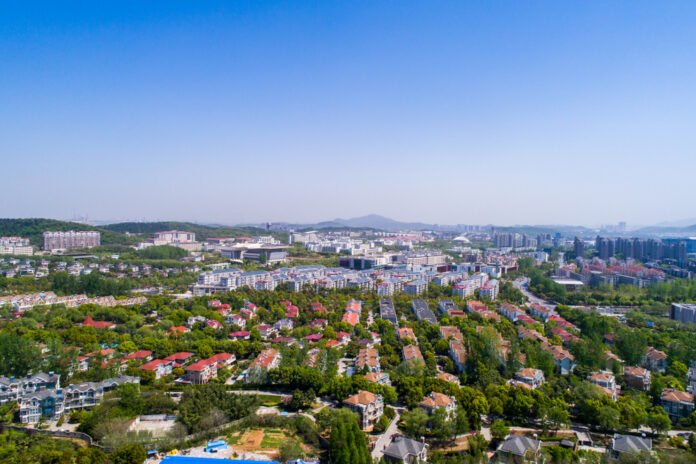
Rather than competing for scarce urban inventory, Le focuses on the ring of suburban and exurban communities surrounding Austin, Texas — Pflugerville, Round Rock, Cedar Park, Hutto, Manor, San Marcos, and Buda among them. These markets benefit from ongoing residential growth, lower land and construction costs, and a regulatory environment Le describes as business-friendly. “There’s opportunity for small businesses to establish,” she says.
Le reports that suburban commercial corridors in the Austin metro currently show healthy fundamentals. Vacancy is not elevated, tenant turnover is quick, and businesses relocating from Austin’s urban core provide a steady pipeline of prospective tenants. That health is partly a function of the same supply constraints that affect central Austin, but at a different price point. The result is a suburban commercial market tight enough to support strong occupancy and rent levels, yet accessible enough for small businesses to operate there. “It’s healthy, but it’s because it’s not easy to build from the ground up,” Le says.
Why Businesses Are Leaving Austin
The suburban migration is not driven by affordability alone. It reflects a practical reassessment by small business operators of what they need in their commercial space. Many businesses that occupied high-traffic urban storefronts are finding their customer base does not require that visibility. A martial arts studio, for example, draws from a defined geographic radius regardless of whether it sits on a prime Austin corridor or in a Pflugerville flex warehouse. In fact, Le notes that some tenants are actively shrinking their footprints, with one martial arts operator reducing from 5,000 square feet to roughly 2,500 square feet to cut costs without disrupting operations.
The cost gap makes the case difficult to ignore. Prime Austin retail runs around $55 per square foot in base rent, while suburban flex space comes in at significantly lower rates. This difference can determine whether a business model is viable or unsustainable. For businesses with specific operational requirements such as noise, heavy equipment, or extended hours, suburban and exurban locations offer practical advantages beyond rent savings. “They don’t need a retail presence,” Le says. “They just need to be in an area where they can set up shop.”
Investing in Austin’s Suburban Markets
Le’s investment focus centers on what she calls the missing-middle segment: flex and warehouse units ranging from 2,500 to 20,000 square feet. This is the tier that larger institutional developers tend to overlook and that smaller operators cannot execute on their own. On the development side, she has completed warehouse-condo projects in this segment and is currently partnering on additional projects in suburban Austin markets, while also identifying value-add opportunities in strip centers where re-leasing and repositioning can capture demand from businesses leaving the urban core.
According to Le, outside investors looking to deploy capital into the Austin, Texas, commercial market should partner with someone who knows the specific submarkets and asset types, and should not assume the Austin growth story applies uniformly across geographies and product types. Commercial real estate, she notes, offers far more strategic flexibility than residential. A well-positioned commercial asset can be optimized for cash flow, equity appreciation, or both, depending on how it is acquired and managed. “Partner with the local expert in the market, especially the asset that you want to invest in,” she says.
Suburban Outlook for Investors
Le also points to Austin-area suburban governments as an underappreciated asset for commercial investors. She says these municipalities are among the most accessible and cooperative she has worked with, and their support can meaningfully accelerate project timelines. For investors accustomed to navigating slower or less responsive urban permitting environments, that accessibility represents a practical advantage that does not always show up in market data.
Whether the suburban commercial opportunity in Austin’s outer markets attracts broader institutional attention remains to be seen. Institutional investors have historically focused on core urban assets, and the smaller deal sizes typical of suburban flex and warehouse projects may not align with conventional deployment strategies. But the fundamentals Le describes — constrained supply, steady tenant demand, lower operating costs, and cooperative local governments — suggest these markets may offer more durable returns than the higher-profile urban core. The gap between where media attention focuses and where ground-level commercial activity is concentrated may represent a lasting advantage for operators willing to look beyond the Austin skyline.
About the Expert: Lezlie Tram Le is Founder and CEO of LT Commercial Group, a commercial real estate firm focused on the Austin, Texas metro area. She specializes in small and mid-size commercial properties — including flex, warehouse, and retail space — across suburban and exurban markets in the Austin metro, with involvement in both tenant representation and commercial development projects in the 2,500 to 20,000 square foot segment.
This article is intended for informational purposes only and does not constitute legal, financial, or investment advice. The views and opinions expressed herein reflect those of the individuals quoted and do not represent an endorsement of any company, product, or service mentioned. Readers should conduct their own due diligence and consult qualified professionals before making any investment decisions.