
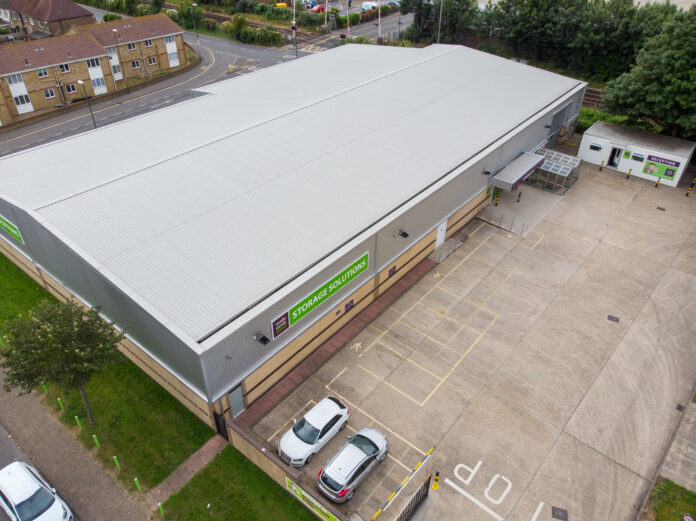
Remote work and institutional expansion are redirecting storage demand away from major metros, creating acquisition opportunities in smaller cities with strong population drivers. For years, secondary markets were considered fallback positions for operators priced out of primary cities.
That perception is changing. Demographic shifts, rising construction costs, and compressed cap rates in major metros are turning smaller markets into deliberate targets rather than consolation choices.
Metro Economics Shift
The conventional wisdom in self-storage has long favored dense urban markets, where high population counts justify the capital required for large-format, climate-controlled facilities. But that logic is increasingly working against smaller operators in primary markets, according to Alex Straffin, owner, operator, and commercial real estate advisor at AdvisorSpaceVault Self-Storage.
In metro markets like Indianapolis, the economics of small-format, drive-up storage don’t pencil out. Land costs force operators toward expensive, large-scale climate-controlled builds, and for operators without institutional capital, the barrier to entry has become prohibitive. “Property size, options, and availability don’t really lend themselves to outdoor drive-up storage,” Straffin says of major urban centers.
That constraint is what pushed him toward secondary and tertiary markets – and what he believes is pushing a broader wave of capital in the same direction.
Population Growth Engines
Straffin’s investment thesis centers on secondary markets with clear, durable drivers of population growth. In his case, that driver is Purdue University in Lafayette, Indiana, which he says has posted record enrollments for multiple consecutive years.
Lafayette, historically dominated by manufacturing, farming, and commercial food processing, is now absorbing an influx of students, faculty, and affiliated businesses that the city’s infrastructure wasn’t built to accommodate. That mismatch, in Straffin’s view, creates storage demand. “These smaller markets that were designed to be small towns are forced into these growth spurts,” he says.
Remote work is amplifying the effect. Workers earning high incomes from tech and professional roles can now live outside major metros, accelerating population distribution into secondary markets. “Everybody sort of working remote and distributing out of major metros, still being able to make a lot of money doing tech jobs or high-impact day-to-day jobs – it’s creating growth in secondary, tertiary markets,” Straffin says.
The combination of institutional population drivers and remote-work migration, in Straffin’s view, produces sustained demand growth that justifies acquiring and improving storage assets in markets that larger operators have historically overlooked.
Bottom-Up Acquisition
Straffin’s acquisition approach is notably bottom-up. He describes sorting listings on commercial real estate platforms by cap rate, specifically targeting properties that require significant operational and physical improvement. In his Lafayette case, he found the property before he fully understood the market, then validated the opportunity by researching Purdue’s enrollment trajectory and the broader demographic changes underway.
“We look for markets well outside of major metros that have some sort of key driver of people that come to these secondary markets,” he says. “As long as you have a really strong drive of people pushing into this region, it’s going to continue to grow.”
The economics of secondary markets also favor this approach. Property values are lower, competition for acquisitions is thinner, and the cost basis allows operators to generate meaningful returns from drive-up, outdoor storage formats that would be unviable on expensive urban land.
Tech-Driven Operations
The secondary-market opportunity Straffin describes is only part of the equation. How an operator runs a facility once acquired determines whether the economics actually hold.
For distressed assets in smaller markets, the turnaround playbook matters as much as the acquisition thesis. Properties in these corridors are frequently undermaintained, undermanaged, and undermarketed – conditions that suppress performance but also create room for meaningful value addition. The gap between what a neglected facility produces and what a well-operated one can generate is where returns are built.
Technology is increasingly closing that gap at a lower cost. Unmanned operations, self-service rental flows, automated task dispatch, and AI-powered call centers are reducing the overhead traditionally required to run a storage facility – making lean operations viable even in markets where staffing a full-time office would erode margins. A customer can now rent a unit, receive access credentials, and move in within minutes, without any staff involvement.
The barriers to building these systems have also dropped considerably. Operators with technology backgrounds can now design and deploy custom integrations, automated workflows, and AI-enabled customer support in a fraction of the time and cost it would have required just a few years ago. For secondary-market operators willing to invest in that capability, the result is a cost structure that larger, legacy-operated competitors struggle to match – and a customer experience that doesn’t require physical presence to deliver.
About the Expert: Alex Straffin is the owner and operator of SpaceVault Self-Storage in Lafayette, Indiana, with a background in software and residential real estate investing prior to entering the self storage sector. His facility operates as a technology-forward, unmanned operation serving the Lafayette and Purdue University market.
This article is intended for informational purposes only and does not constitute legal, financial, or investment advice. The views and opinions expressed herein reflect those of the individuals quoted and do not represent an endorsement of any company, product, or service mentioned. Readers should conduct their own due diligence and consult qualified professionals before making any investment decisions.

