The collapse of a major downtown property portfolio can destabilize a city center. In St. Paul, Minnesota, what began as a threat to downtown’s recovery has become the foundation for a new strategy aimed at reversing post-pandemic decline. When a major landowner who controlled a significant share of downtown commercial space died in early 2024, his widow put the entire portfolio up for sale at once — the sudden influx of properties overwhelmed local buyers, deepening existing challenges in the city’s core.
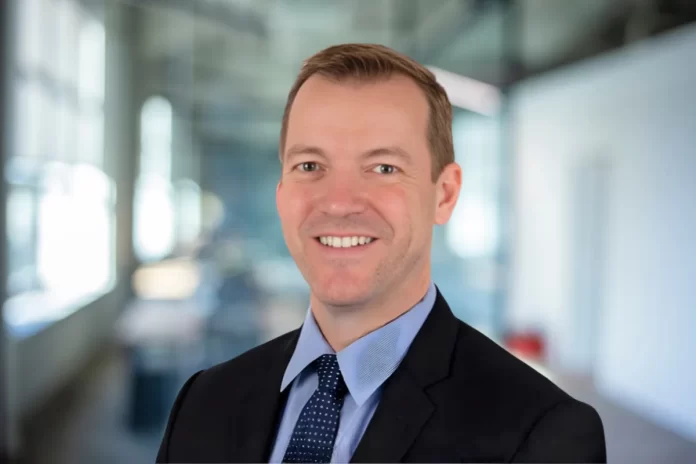
Instead of waiting for market forces to resolve the situation, local leaders created a nonprofit development corporation with a clear mandate: acquire distressed properties and drive coordinated revitalization in downtown St. Paul. Dave Higgins, President of the Saint Paul Downtown Development Corporation, was brought in for his combined expertise in law, public sector redevelopment, and private development.
The St. Paul Challenge
Downtown St. Paul, like many city centers, suffered during the pandemic, but its situation was worsened by years of neglect by a major property owner. When that owner’s entire portfolio hit the market at once, local real estate professionals could not absorb the volume. The St. Paul Downtown Alliance, a business leadership group, commissioned a two-year study that produced the Downtown Investment Strategy report. The findings were clear: the city needed direct real estate intervention, but the Alliance was not equipped to buy or manage property.
To bridge this gap, local leaders sought someone with experience in real estate, investment, development, public-private partnerships, and law. Higgins fit the profile and was hired to build a new organization from scratch.
A Nonprofit Approach
The resulting St. Paul Downtown Development Corporation was modeled in part after Cincinnati’s 3CDC. Still, with a key difference: St. Paul started by hiring leadership and developing a strategy before raising capital.
“We worked in reverse,” Higgins says. He spent his first month developing a strategic framework for the downtown turnaround. The organization was set up as a 501(c)(3) nonprofit, allowing access to a wider array of funding sources and enabling the pursuit of projects that might lose money in the short term but could restore market confidence.
This approach quickly yielded results. Within the first year, the corporation acquired or gained control of five major downtown properties: one commercial building, three office buildings, and a large parking garage totaling 946 stalls. Three of the buildings were boarded up and condemned when the corporation began its work.
Restoring Momentum Downtown
The corporation’s philosophy is that downtown properties are either helping or hurting the broader market, there is no neutral status. “A catalyst is either hurting things or it’s helping things,” Higgins says. By taking action, the corporation aims to halt the loss of confidence and investment in downtown St. Paul.
The size of the distressed portfolio meant that coordinated intervention could “force the bottom” and prompt other investors to re-engage. According to Higgins, the corporation’s early moves have already begun to change market psychology. Community members and investors are taking notice, and private developers are beginning to study new opportunities.
Residential Stability
While commercial vacancy remains a challenge, downtown St. Paul’s residential sector is holding steady. Occupancy in downtown apartments has stayed around 95%, and the downtown population has grown by 1.2% to 1.3% annually for the past five years.
Despite concerns about urban issues, people continue to choose downtown living. Higgins points to this stability as a crucial base for wider revitalization efforts. Strong residential demand helps support retail, restaurants, and future mixed-use development, even as the office market lags.
Technology’s Limited Role
Although many organizations are turning to artificial intelligence to streamline operations, Higgins sees little direct use for AI in downtown redevelopment. “We can’t do deep dives on property due diligence using AI. We can’t do building tours or negotiate contracts with AI,” he says.
The corporation uses AI to polish presentation materials and improve written communication, but the core work is personal. Building relationships with property owners, tenants, investors, and city officials remains central. “It’s a heavy interpersonal business,” Higgins explains. Success depends on face-to-face meetings and trust-building, not automation.
Redevelopment Plans for 2026
Looking ahead to 2026, the corporation is focused on executing redevelopment plans for its newly acquired properties. This includes reopening a parking garage and restoring ground-floor commercial space by year’s end, as well as attracting tenants to those spaces.
Two larger projects are in the planning phase: converting office towers of over 500,000 and 300,000 square feet into residential or mixed-use buildings. Both towers occupy full city blocks with underused northern sections, making them candidates for selective demolition and new construction. Higgins notes that these large-scale redevelopments will take 2-3 years to reach the construction stage, as financing and planning for projects of this size are complex and time-consuming.
Measuring Progress
The corporation’s continued success will depend on raising sufficient capital, expanding its project team, and attracting renewed private sector interest in downtown St. Paul. Broader market factors — especially interest rates and investor expectations — will also affect outcomes.
Higgins draws a parallel with development cycles during the high-interest-rate environment of the 1980s. Developers and investors then adapted to tougher conditions, and he expects similar adjustments today. “Sometimes that means adjusting expectations and requirements to get to the next chapter,” he says.
A Model for Urban Recovery
St. Paul’s approach demonstrates that strategic nonprofit intervention can address urban market failures. By acquiring distressed properties, absorbing short-carry costs and predevelopment expenses, and investing in visible turnarounds, the corporation is working to restore confidence and attract private investment. The model combines patient capital, experienced leadership, and targeted property acquisition to restart positive momentum in struggling downtowns.
Other cities facing similar challenges can learn from St. Paul’s example. Instead of waiting for market forces to correct deep imbalances, a focused nonprofit can intervene directly — stabilizing key properties, signaling confidence, and laying the groundwork for broader recovery.
Looking Forward
St. Paul’s experience highlights the importance of leadership and strategic action in urban recovery. The city’s willingness to create a nonprofit development corporation, invest in expertise, and take calculated risks has already begun to shift perceptions and draw new interest downtown. As large redevelopment projects move forward, the real test will be whether these early gains can translate into lasting private sector engagement and a more resilient downtown economy.
For cities grappling with concentrated property distress and slow post-pandemic recovery, St. Paul offers a clear lesson: coordinated, mission-driven intervention can break the cycle of decline and restore urban momentum. The work is ongoing, but the groundwork has been laid — and other communities are watching closely.