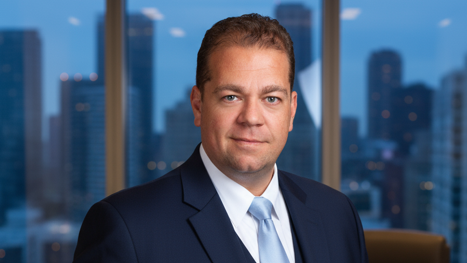
The commercial real estate market may appear stable, but veteran distressed debt investor Bill Bymel sees mounting evidence of trouble ahead. With nearly two decades of experience navigating real estate cycles – from the aftermath of the 2008 mortgage crisis to today’s higher interest rates – the founder of First Lien Capital LP believes the industry is approaching a significant reckoning.
“In the world of commercial real estate, there’s way more distress than what the numbers show,” Bymel says. His concerns are rooted in recent private credit failures and shifts in how banks manage troubled loans – signals he believes are being overlooked by most market participants.
A Career Forged in Real Estate Crises
Bymel’s entry into distressed debt investing was unconventional. After studying film at NYU in the 1990s and producing short films – one of which is still shown in NYU classes – he left Hollywood for Florida real estate in 2002. Starting as a fix-and-flip investor under his father’s guidance, he expanded into commercial development, working with major retailers such as McDonald’s and CVS.
His turning point came in the summer of 2008, just before the collapse of Lehman Brothers. A Southern California fund manager contacted him about pools of non-performing residential mortgages in Florida – first-lien loans on new construction properties, many defaulted after the first payment.
“It was a scene out of The Big Short,” Bymel recalls. That moment led him to begin purchasing distressed notes directly, launching a decade-long focus on residential mortgage defaults.
What set Bymel apart was his “borrower-first” approach, which he details in his 2017 book “Win Win Revolution.” Instead of aggressive collection tactics, he prioritized treating distressed borrowers with dignity and seeking sustainable solutions.
“If we could buy a loan for 60 cents on the dollar and the borrower could reperform at the property’s actual value, we’d forgive the underwater debt, put them in an equity position at 95%, and keep them in their homes,” he explains. “We did that on about 30 to 40% of the pools we bought. That was the best exit – a true win-win.”
New Warning Signs in Today’s Market
Bymel is now focused on what he calls “cracks in the ice” within the commercial real estate and private credit markets. In the past 60 days, several major failures in private credit have surfaced, including $100–150 million loans from institutions like BlackRock, Apollo, and Jefferies that required total write-downs.
“These failures – Tri Color auto lender, First Brand auto parts supplier, Renovo home partners – show fraud both in bank lending and private credit,” Bymel says. “We’re seeing more of this surface every day.”
He is especially concerned about non-depository financial institution (NDFI) loans – about $1.5 trillion in bank lending to other lending institutions. “A high-grade bank is lending money to a lender with weaker underwriting standards, who then lends into the private market,” he says. This layered risk, he argues, is not being captured in headline default rates.
Pressure Mounts in Commercial Real Estate
The core of the commercial real estate problem is simple math. During the low-interest era of 2021–2023, mid-level multifamily properties in average locations sold at 4.75% cap rates. “Those days are gone forever,” Bymel says. “Investors are no longer willing to buy these properties at such low cap rates because their cost of capital is much higher.”
This change is hitting smaller commercial properties – those valued at $10 million and under – particularly hard. These properties make up a large portion of the $4 trillion commercial mortgage market. “This is a mom and pop business,” Bymel says. “Doctors who own medical office buildings, police officers and firefighters who move from single-family rentals to small apartment complexes – the 5% mortgage they got five years ago is coming due, and banks are telling them the new rate is 8%.”
Commercial mortgage structures make this worse. Most loans, regardless of their amortization period, require balloon payments within five to seven years. “If you had an 80% loan-to-value mortgage with a 1.25 debt service coverage ratio, and your variable rate rose from 3.5% to 6%, you’re underwater just from higher borrowing costs,” Bymel explains.
Extending Troubled Loans or Facing Reality
Some analysts expect banks to keep extending troubled loans to avoid recognizing losses. Bymel, however, sees only a 25% chance of this happening indefinitely. The Federal Reserve’s Troubled Debt Resolution (TDR) standards allow banks to classify loans as performing if they receive any payment under modified terms, but Bymel questions the sustainability of these modifications. “The terms sometimes don’t even make sense,” he says.
More alarming to Bymel is the rapid growth in collateralized loan obligations (CLOs), which he compares to pre-2008 mortgage-backed securities. “We’re seeing the largest CLO lending volumes in history over the past five years,” he says. “These CLOs are rated as safe and sold to pension funds, insurance companies, and retail investors.”
He points to bank call sheet data for more evidence of hidden distress. While banks report 3–5% default rates in commercial real estate, Bymel argues that selling bad debt off their balance sheets masks the true level of trouble. “The actual default rate is much higher than perceived,” he says.
Opportunities for Prepared Investors
For investors with available capital, Bymel believes the next 12–24 months will present significant opportunities. “The best deals are traded off market through relationships in the secondary market, directly with banks or private equity,” he says.
His investment strategy is rooted in fundamentals: “If you can buy commercial or residential investment real estate at prices that work under today’s market conditions, there are substantial tax advantages to owning cash-flowing property.”
Location remains critical. “Focus on major metro areas and their supporting suburbs,” Bymel advises. “Cities like New York, Chicago, Miami, Atlanta, Los Angeles, Dallas, Houston, San Francisco, and Seattle will always have tenant demand. If you own investment real estate there, you’ll have a steady pool of renters.”
Looking Toward a Correction
While political leaders may try to avoid a major crash, Bymel believes market forces are building pressure that will eventually force a correction. “There are bubbles in asset values, affordability issues, opaque lending, and Wall Street derivatives that are close to rupture,” he says.
For real estate professionals, his message is direct: focus on fundamentals, avoid hype-driven deals, and be ready for significant price adjustments in commercial real estate. The warning signs may not be visible in official data yet, but Bymel argues that underlying pressures are mounting and could soon trigger a substantial market correction.
Bymel shares his industry knowledge and strategies like this and more for negotiating real estate debt and navigating the secondary mortgage market through the “Debt Doctor” podcast. Stay connected with Bill Bymel here.