
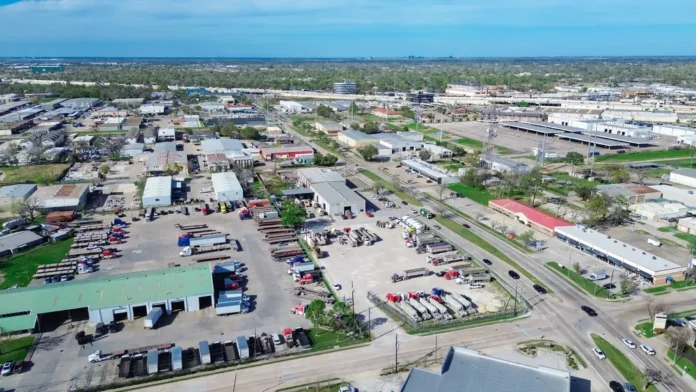
Houston’s industrial sector has enough tenant demand to justify new investment, but the buyers who would normally act on that signal have largely stopped transacting. The result is a market where only businesses that need space to operate are closing deals, while return-driven capital sits idle.
This divide is not a temporary dip in buyer sentiment. It reflects a structural shift in who can afford to purchase industrial property under current financing conditions.
Investor Demand Vanishes
The buyer pool for Houston industrial assets has narrowed to a single category, according to Shahin Naghavi, Managing Partner and Principal Broker at Riverside Equity Group. At current interest rates, investors cannot underwrite acquisitions and still generate acceptable returns. That leaves owner-occupiers as the only active buyers. These are businesses that need warehouse or flex space to run their operations.
“An investor typically can’t make the numbers work with the current interest rates,” Naghavi says. “Owner-occupiers need the demand for the space.”
For sellers, this means a smaller audience and potentially longer marketing periods. For the broader market, it means transaction volume has dropped even though underlying demand for industrial space remains strong.
Deals Collapse Late
The financing problem is not only keeping buyers out at the front end. It is also causing transactions to collapse after they are already under contract. Naghavi says this has become a recurring pattern.
“We’ve seen quite a few transactions fall through at the 12th hour,” Naghavi says, “and normally it’s because of some sort of financing or an investor getting kind of nervous about the market.”
Late-stage deal failures cost sellers time and force re-pricing. Buyers lose due diligence expenses. This pattern also feeds on itself: uncertainty about whether deals will close makes the next buyer more hesitant to commit.
Naghavi attributes the nervousness not solely to interest rate levels but to the broader policy environment. Shifting government positions on tariffs and trade create an unpredictable backdrop for long-term capital commitments. “Today there’s a tariff, tomorrow there isn’t. Today there’s a war, tomorrow there’s not,” he says. “That affects a lot of small to mid-sized business owners.”
Inventory Remains Scarce
The financing squeeze is colliding with another structural feature of Houston’s industrial market: there is not much available to buy. Naghavi says this surprises many outside investors who expect the same level of available inventory they find in other commercial sectors.
“People want to invest in this, and they get surprised when there’s not a lot of opportunity, not a lot of options,” Naghavi says. Investors coming from retail real estate backgrounds often expect comparable availability and are caught off guard by how thin the industrial market is.
The market is undersupplied relative to demand. This condition would normally attract capital, but the financing environment prevents investors from underwriting at current prices. The result is a market that is short on both inventory and investment activity. This suppresses transaction volume without correcting prices downward. For business owners who need space now, this means fewer options, less negotiating leverage, and limited ability to wait for better conditions.
Recovery Timeline Remains Distant
A near-term resolution looks unlikely. Naghavi does not expect the market to turn more active until 2027 or 2028, and only if interest rates ease and buyer confidence recovers.
“We’re hoping that interest rates reduce a little bit to make deals more attractive,” Naghavi says. “We really need consumer confidence to come into the market.”
Naghavi points to development activity as another lens on the same imbalance. When a specific building type is unavailable in a submarket, that gap signals unmet demand that new construction could address. But the same rate environment keeping buyers out of the resale market also makes new construction harder to justify. Development faces the identical math problem as acquisitions: the underlying need exists, but the returns do not clear the bar at current borrowing costs.
For owners of existing Houston industrial assets, the near-term outlook is stable occupancy but limited liquidity. Tenants need space, but few investment buyers are competing to acquire buildings. For businesses considering a purchase, the tradeoff is clear: buying now means facing limited inventory and elevated carrying costs, but also less competition from investors who cannot justify the same economics. If rates do ease in the next two to three years, that competitive dynamic will change quickly. Supply has not meaningfully expanded during the current period of constraint.
About the Expert: Shahin Naghavi is Managing Partner and Principal Broker at Riverside Equity Group, a Houston-based firm operating across both industrial real estate development and brokerage with a focus on flex and light industrial space.
This article is based on information provided by the expert source cited above. It is intended for general informational purposes only and does not constitute legal, financial, or real estate advice. Readers should conduct their own research and consult qualified professionals before making any real estate or financial decisions.

