
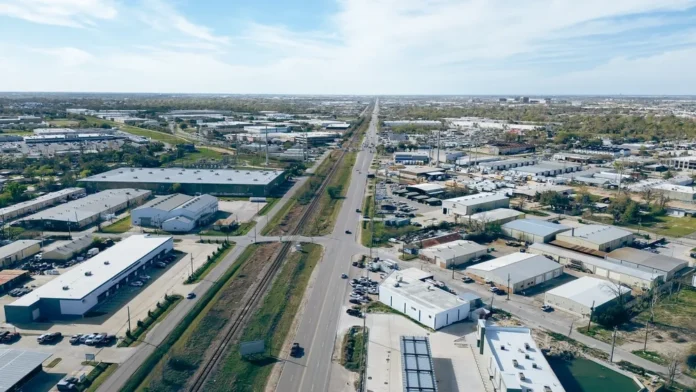
Strong tenant demand for small-bay industrial space is not translating into new supply because the economics of building it simply don’t work for most developers.
The shallow bay industrial sector is caught in a paradox: tenant demand is strong, vacancy is tight, and yet new construction has nearly stopped. According to Jeff LaPour, Founder, CEO, and President of LaPour Partners, the culprit is a cost structure that has outpaced what small-bay tenants can realistically pay in rent. The result is a product type that the market wants but that developers increasingly cannot justify building.
Defining the Problem
Part of the confusion around shallow bay industrial stems from how loosely the term gets used. LaPour argues that the definition matters enormously when assessing market conditions. “Shallow bay to us means tenants below 15 or 20,000 square feet,” he says. For others, the threshold may be 50,000 square feet. That distinction is not semantic, it determines whether you’re looking at a market with genuine supply constraints or one that simply appears tight because of how data gets aggregated.
When the definition is applied strictly, LaPour says the picture is unambiguous: markets are very tight, little new construction has been added, pricing is high, and suitable sites are scarce. Vacancy in this segment, at least for LaPour Partners’ own portfolio, reflects that tightness, the firm’s shallow bay product is currently 100% leased.
Why the Math Fails
Despite that demand signal, LaPour is direct about why developers are not rushing to fill the gap. “The cost is the biggest issue,” he says. “The small buildings like this with small finish-outs are very costly, and in many cases too costly to justify the rents that are being paid.”
The economics of small industrial buildings are structurally disadvantaged compared to larger formats. Per-square-foot construction costs do not scale down proportionally when building size shrinks, mechanical systems, site work, permitting, and finish-out costs are relatively fixed regardless of whether a building is 10,000 or 100,000 square feet. Developers building for tenants under 20,000 square feet absorb a disproportionate cost burden relative to the rent they can charge. In larger-bay industrial, those fixed costs get spread across more leasable area. In true shallow bay, they often don’t.
This dynamic has been present for years, but it has become more acute as construction costs remain elevated. LaPour notes that while costs have come down somewhat from their peak, the decline has not been significant enough to restore viability for many shallow bay projects. Land values, meanwhile, have not corrected meaningfully either, leaving developers squeezed from both ends.
Broader Market Implications
The shallow bay cost problem reflects a broader tension in the industrial development market between where demand exists and where new supply can actually be delivered profitably. LaPour’s observation that supply has “tapered quite a bit” across industrial markets is generally viewed as a positive for absorption. Still, the shallow-bay segment illustrates that a supply pullback is not always a strategic choice. In many cases, it is simply a recognition that the product cannot be built at a price that works.
For investors and landlords who already own shallow-bay product, this is a favorable environment. Tight supply and strong demand support rent growth and low vacancy, and the absence of new competition means existing assets hold their value. But for markets that need more small-tenant industrial space, particularly infill urban markets where small businesses, last-mile operators, and light manufacturers are competing for limited inventory, the supply gap is likely to persist. LaPour suggests that equilibrium in the broader industrial market may be 18 to 24 months away, but for true shallow bay, the structural cost problem suggests that timeline may be optimistic.
What Makes It Work
The developers who do pursue these projects tend to succeed for reasons that are hard to replicate rather than through a repeatable method. Most already control land at a low cost, since paying full market price for a site erases whatever thin margin exists. They also tend to have deep, hands-on knowledge of local approval processes, which lets them take on sites that other developers avoid simply because approvals can be long and uncertain.
Even so, this kind of project does not scale. Each one depends on a specific mix of circumstances, built up over time, rather than a formula another developer could pick up and repeat elsewhere. That is a large part of why so few builders take on these projects, even when the demand for them is obvious.
As long as construction costs stay elevated and land values hold, the product type will likely remain undersupplied, a condition that rewards patient, specialized operators while leaving most of the market on the sidelines.
About the Expert: Jeff LaPour is founder and president of LaPour Partners, a regional developer based in Nevada with active projects across Arizona, Colorado, and California, focused on ground-up development in hotel, office, and industrial. The firm has a total development pipeline approaching $750 million, predominantly hotel-driven.
This article is intended for informational purposes only and does not constitute legal, financial, or investment advice. The views and opinions expressed herein reflect those of the individuals quoted and do not represent an endorsement of any company, product, or service mentioned. Readers should conduct their own due diligence and consult qualified professionals before making any investment decisions.

