Fort Worth’s rapid ascent to one of the largest cities in the United States has generated considerable civic pride. But the institutional structures governing that growth were built for a smaller, slower city, and the gap between the two is becoming harder to ignore.
The city’s trajectory tells the story clearly: decades of rapid population growth carried Fort Worth from a mid-sized regional hub to a top-10 American city, and the pace hasn’t slowed. With 20,000 new residents arriving every year, new development pipelines, and new policy pressures mounting, the frameworks built to manage them are being tested. Fort Worth is asking a question that many fast-growing Sunbelt cities eventually face: what does it actually take to govern at this scale?
Part-Time Council, Major City
The answer starts with the people making decisions. Fort Worth’s City Council members are classified as part-time employees and compensated accordingly — a structure that made sense for a smaller, slower city but sits awkwardly against the reality of governing one of the ten largest cities in the country.
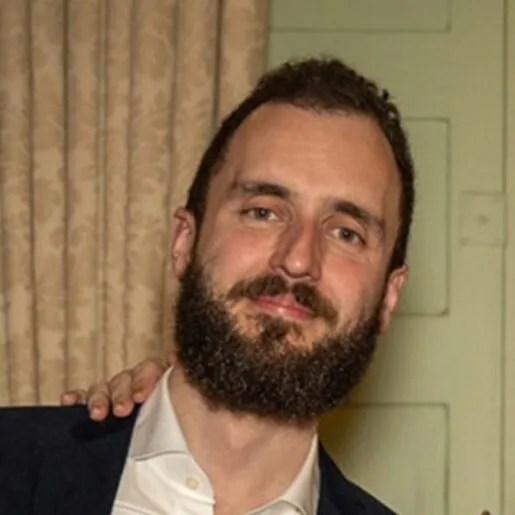
Elizabeth Beck, City Council Member for District 9 in Fort Worth, is direct about the disconnect. “Council is most certainly not a part-time job,” she says. Her workload spans constituency services, development meetings, legal and policy review, and coordination with city staff — all while maintaining a full-time law practice outside her council role, as most members do. The practical consequence is a council stretched thin across competing demands, from residents calling about loose dogs and missed trash pickups to developers pitching multi-year, city-shaping projects.
Beck brings an uncommon combination of credentials to the role: a background in city planning, employment law, and military service. That range, she says, allows her to move between the 30,000-foot strategic view and the granular details of a site plan or incentive package — a capability that District 9, with its large-scale and sophisticated development activity, demands.
Growing Pains
Beck offers a candid characterization of where Fort Worth stands. “I describe it as city puberty,” she says. “We’re becoming that top-10 city, but we’ve got some growing pains. Our legs are too long, and our voice is changing.”
The systems and structures built during one phase of a city’s life are straining under the demands of the next. This shows up most visibly in the development process, where even experienced developers sometimes encounter bottlenecks. Fort Worth recently won recognition for its development department’s efficiency, but Beck is careful not to overstate it. Winning an award, she notes, doesn’t mean the process is perfect. Her office frequently steps in as a liaison between developers and city staff to help navigate those friction points — a workaround that works, but also signals a gap.
One emerging pressure point is the rise of data centers. Like many communities across Texas and the nation, Fort Worth is wrestling with how to site and integrate these facilities, what best practices look like for development around them, and how they fit within existing neighborhoods. It is a challenge without an established playbook, and one that is landing on council desks with increasing frequency.
Scale Demands More
“With bigger cities come bigger problems,” Beck says. Those problems surface where public and private interests intersect most directly: permitting timelines, zoning decisions, and economic incentive negotiations. Council has two formal points of intervention — zoning changes and economic development incentives — but the real work often happens in between, navigating the friction that accumulates as projects move through the system.
In older parts of the city like District 9, development is further complicated by the legacy of earlier, less efficient planning. Infill parcels are frequently encumbered by easements and utilities that make even straightforward projects complex. Tax increment financing districts help mitigate some of those constraints, but they add another layer of process to an already demanding environment. Meanwhile, active projects like the Goldenrod and West Side Village developments, along with the convention center expansion, signal that capital is moving and the planning-to-construction pipeline is functioning.
Beck’s district — encompassing downtown, the medical district, TCU, and the central business district — sits at the center of Fort Worth’s most consequential development activity. The projects arriving there are large in scale and sophisticated in structure, requiring sustained, informed engagement from city leadership. That is a high bar for a part-time governance model to clear.
Signs of Adaptation
Fort Worth is not standing still. Beck points to the recent appointment of Jay Choppa as city manager as a meaningful signal. Choppa previously led the city’s economic development department, and Beck believes that background equips him to engage with the development community in concrete, creative ways rather than from a purely administrative distance.
On housing, Beck sees both urgency and momentum. With 20,000 new residents arriving annually, affordability is a pressure felt across the income spectrum — by renters and homeowners alike. The only sustainable response, she argues, is ensuring that housing supply keeps pace with demand, and that means more than just apartments. A variety of housing options, across price points and typologies, is what a growing and economically vibrant city requires. A $10 million affordable housing package included in an upcoming bond measure is one concrete step in that direction.
Looking further ahead, Beck believes Fort Worth needs a broader conversation — not just about how to process more development, but about what kind of growth the city actually wants. How much, how fast, and how far the city should grow are questions she sees coming into sharper focus in the next few years. Getting those answers right will require governance structures, and leaders, equal to the city’s ambitions.
About the Expert: Elizabeth Beck is the City Council Member for District 9 in Fort Worth, Texas, a district that includes downtown, the medical district, TCU, and the central business district. She holds a background in city planning and employment law and, like most Fort Worth council members, maintains a full-time job outside her council role.
This article is intended for informational purposes only and does not constitute legal, financial, or investment advice. The views and opinions expressed herein reflect those of the individuals quoted and do not represent an endorsement of any company, product, or service mentioned. Readers should conduct their own due diligence and consult qualified professionals before making any investment decisions.