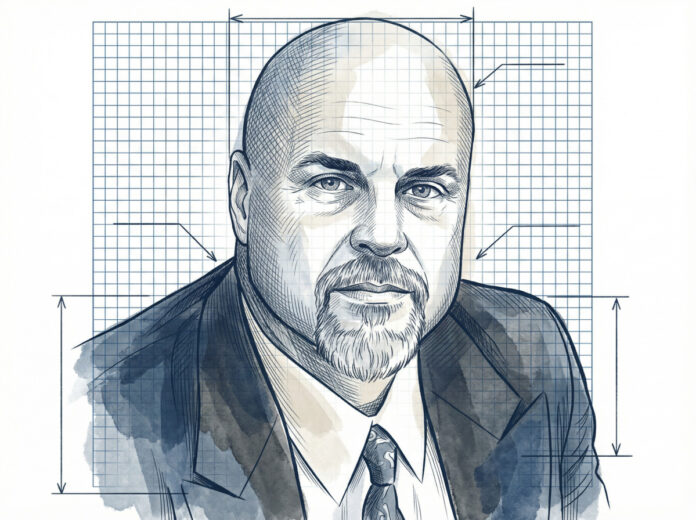
A 30-year commercial operator has watched investors talk themselves out of profitable real estate for decades. The pattern has not changed. The cost of it has.
Real estate sentiment surveys keep turning up the same contradiction: most investors expect conditions to improve, but a large share of them plan to buy nothing this year. In Southeast Michigan, where apartment rents have climbed steadily for decades and sellers are still harder to find than buyers, the price of waiting is not abstract. It shows up in acquisition costs that are higher next year than they are today.
Larry Gotcher, owner and broker of Resource Realty Group in Ann Arbor, Michigan, has been closing commercial transactions since 1991 and has watched this dynamic play out through every cycle. His assessment is direct: the single biggest mistake investors make right now is being too selective. “Purchasing real estate in America is one of the most lucrative things you can do,” he says. “It’s hard to go wrong, even if you make a mistake, because you get your appreciation back over time.”
When Caution Becomes Paralysis
There is a meaningful difference between disciplined underwriting and waiting for conditions that never arrive. Investors who build real portfolios, in Gotcher’s view, tend to do it by closing frequently and winning incrementally rather than holding out for a single large win. “I would rather close more transactions and win a little bit every time,” he says. “In the end, you’re going to win bigger because you own more property.”
That logic holds especially well in markets like Southeast Michigan, where Resource Realty Group operates. Inventory has been short for years, buyer demand consistently exceeds available supply, and rents have moved in one direction for as long as most operators can remember. Waiting for a better entry point in that kind of market typically means paying more for the same asset.
The Questions That Signal a Buyer Who Will Not Close
After more than three decades in commercial real estate, Gotcher has a clear read on the difference between genuine due diligence and a buyer looking for a reason to walk. Two questions come up repeatedly as reliable signals that a deal is going nowhere.
The first is asking why the seller wants to sell. It feels like reasonable diligence, but in practice it rarely changes the analysis. Andrea Gotcher, who handles residential transactions and analytics at the firm, puts it plainly: “Why does anybody get into real estate? Buy low and sell high. They’re just wanting to move on to a different project, or they want their money.” The answer to that question is almost always the same, and it does not tell you whether the deal makes sense for you.
The second is requesting seller financials to evaluate historical performance. Gotcher’s position is that this focuses attention on the wrong variable. What the current owner did with the property is far less relevant than what a capable operator can do with it going forward. “We know our area. We know what we can do with the property. We base our numbers on that,” Andrea Gotcher says. Investors who lack that conviction often use seller history as a reason to pass on deals they should own.
One Rule That Does Not Move
Gotcher’s acquisition criteria are straightforward. A property needs to cash flow at or above zero after all debt service. That is the floor, and he does not go below it. Monthly negative cash flow requires every other variable in the deal to be precisely correct to avoid losing money, and that is a risk profile he does not accept.
Breaking even on a monthly basis is workable. Tax depreciation generates a real return on top of flat cash flow, and long-term appreciation builds equity over time. A deal that looks unremarkable in the first year typically looks like a sound decision a decade later. That is how the math is supposed to work, and it requires patience that many investors do not practice.
Hold Through the Uncomfortable Parts
The principle that runs through all of Gotcher’s advice is straightforward: buy and hold. “Don’t be scared by temporary market conditions that force you to sell,” he says. “Make sure you hold as long as you can.”
That applies when rates are elevated, when the market is flat, and when headlines are grim. Investors who sold Ann Arbor properties into the 2008 downturn came out significantly behind those who stayed in. The market corrected, and the properties appreciated. Time resolves most underwriting imprecision in real estate in a way that is essentially impossible to recover from if you have exited the position.
The current environment, with many buyers still waiting for certainty, looks a lot like prior cycles. Those who are acquiring now, with sound assumptions and a willingness to break even in the short term, are likely to look back at this period as a reasonable entry point. Those waiting for conditions to become obvious will be looking at higher prices by then.
About Resource Realty Group: Resource Realty Group is a full-service commercial and residential brokerage headquartered in Ann Arbor, Michigan. Led by Owner and Broker Larry Gotcher, the team has built a reputation for closing high-volume commercial transactions through deep market knowledge, disciplined process, and creative deal structuring. The group also manages land development projects and operates a REIT designed to provide investors with access to resilient, income-producing real estate across Michigan and international markets. Website: www.resourcerealtygroupmi.com
This article is based on information provided by the expert source cited above. It is intended for general informational purposes only and does not constitute legal, financial, or real estate advice. Readers should conduct their own research and consult qualified professionals before making any real estate or financial decisions.
Disclosure: Individuals or companies mentioned may have a commercial relationship with KeyCrew.